MINIATURE PAINTING
Basholi School, late 20th century
Dimension: 8 x 9 in (each)
Provenance
These museum quality paintings are from a private collection in Delhi and were commissioned in the late 20th century
Details
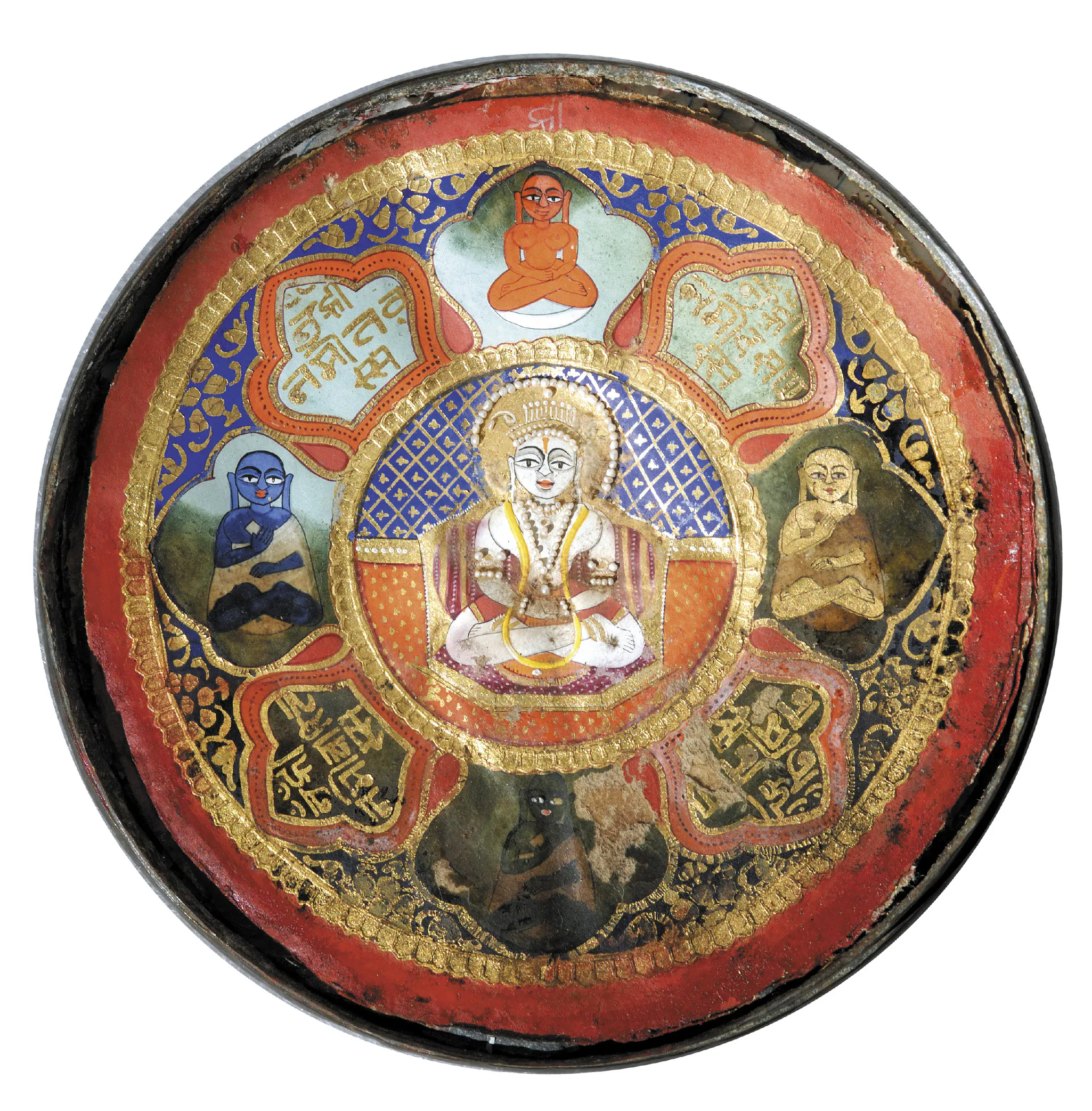
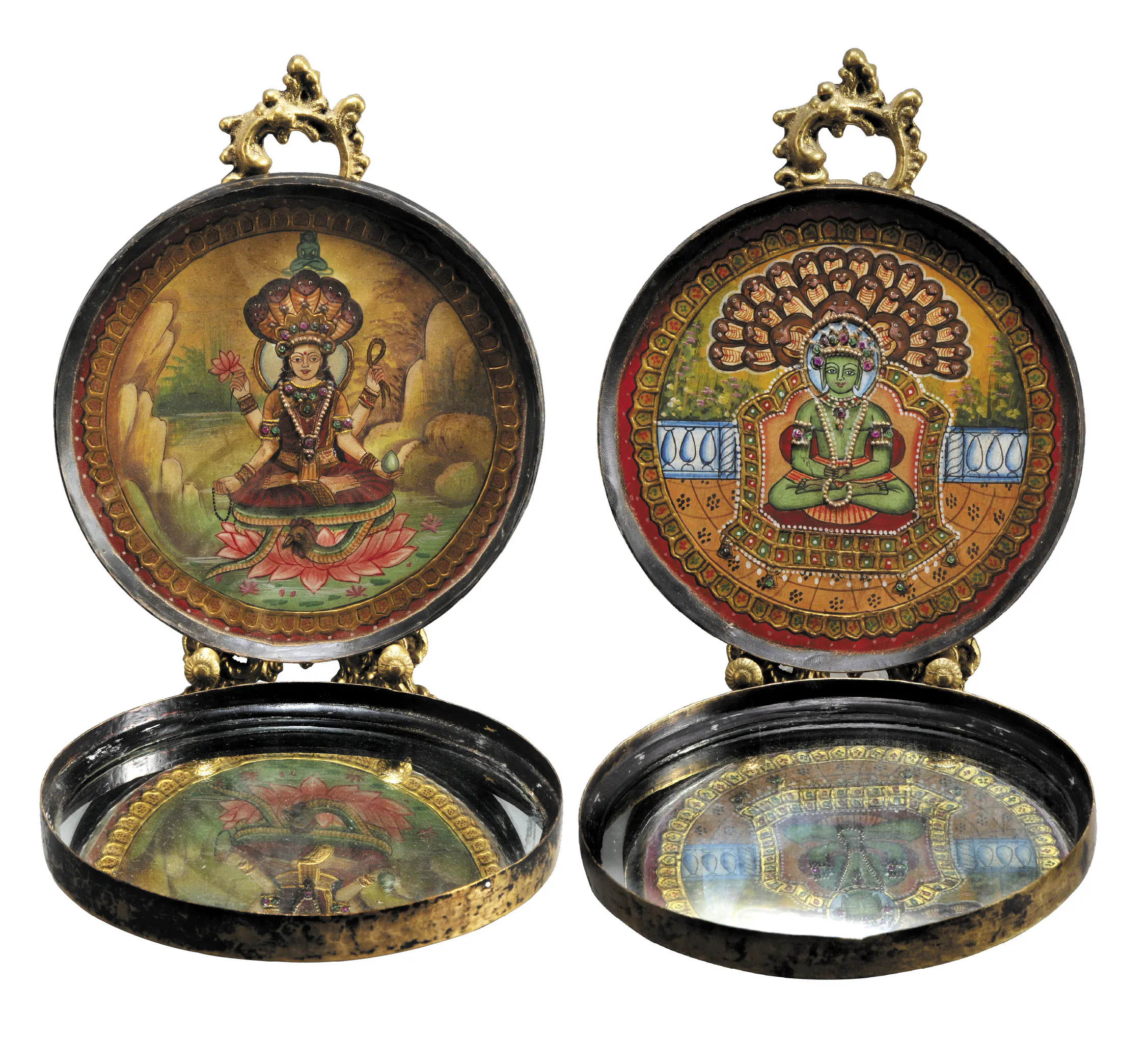
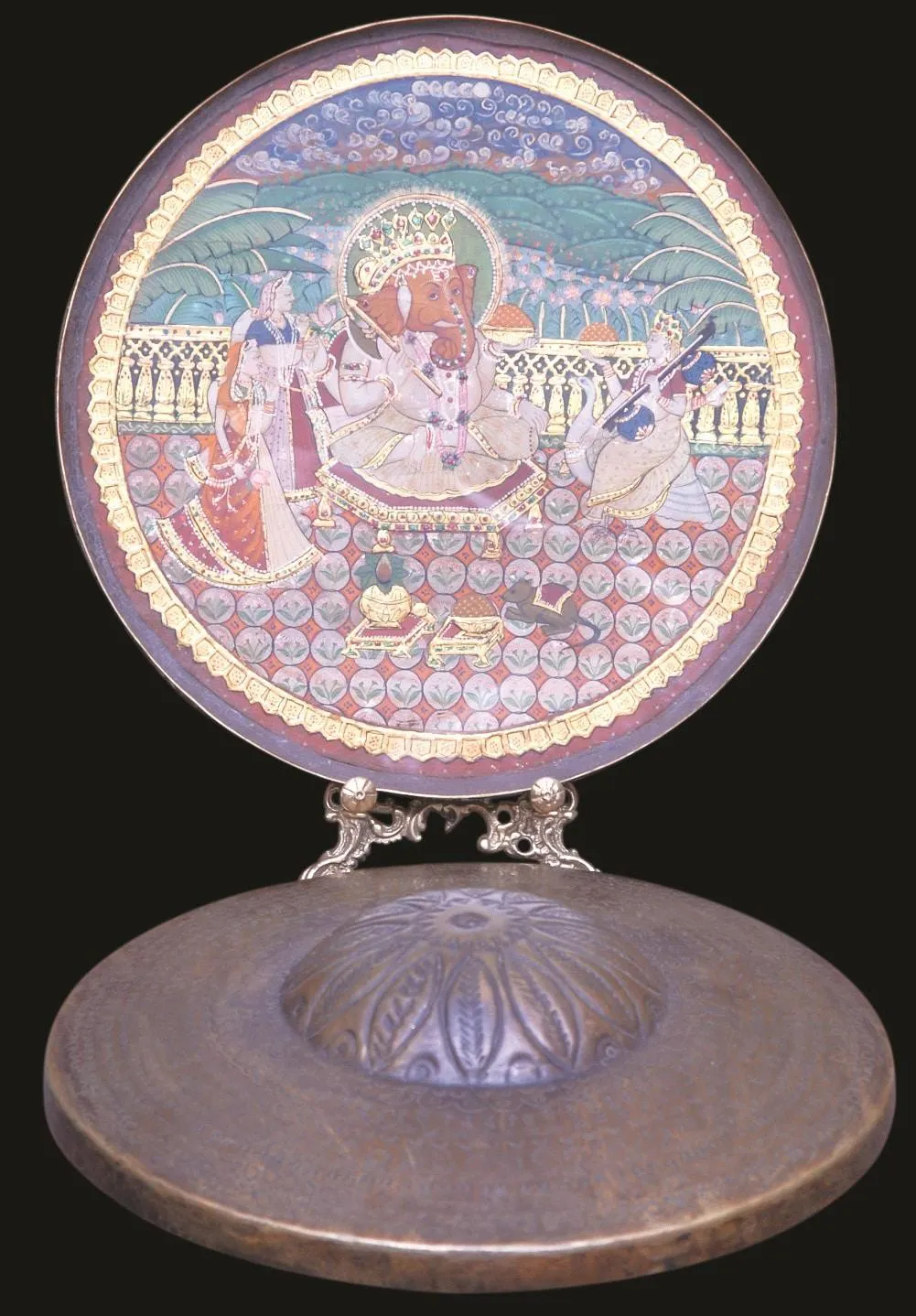
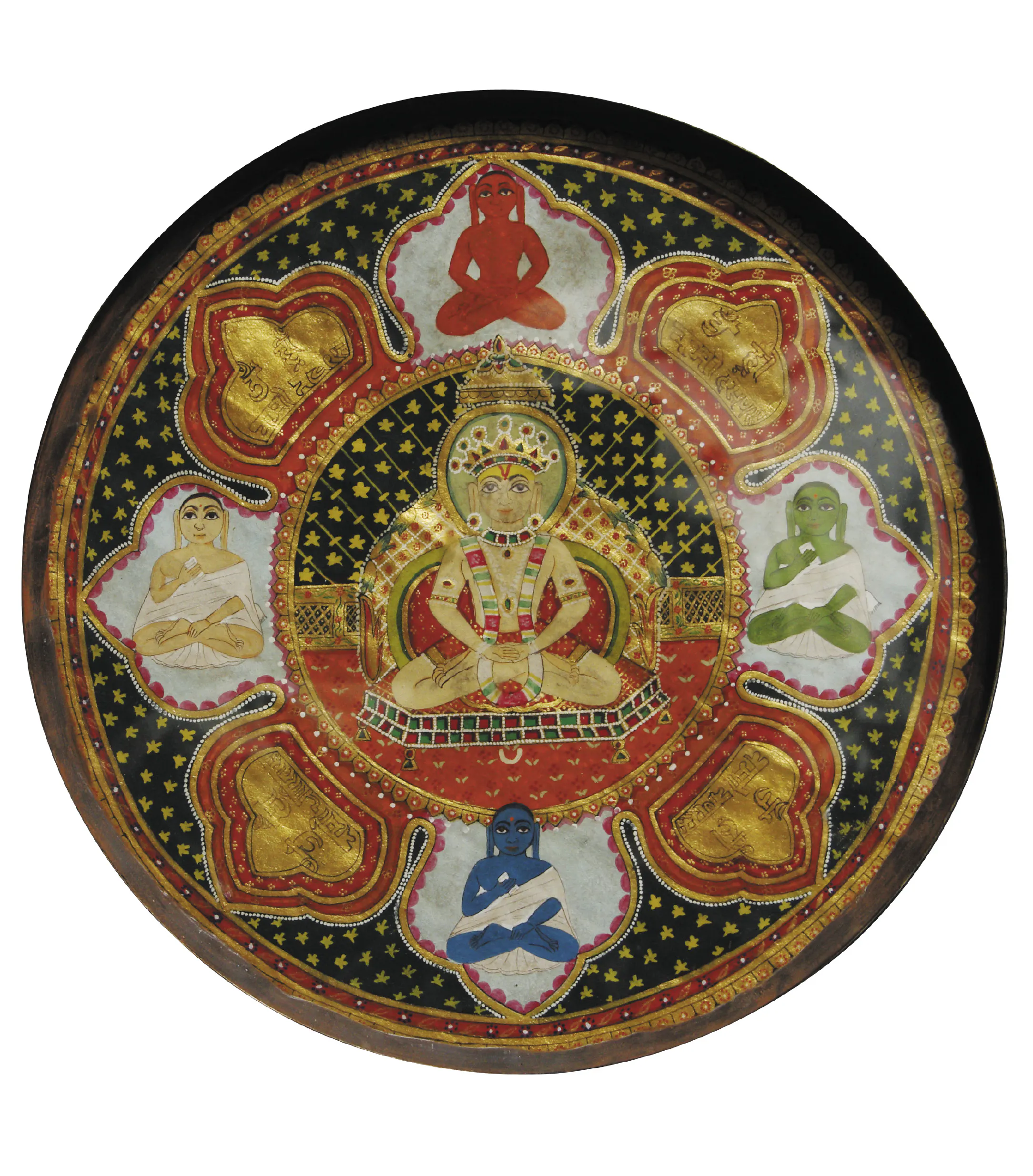
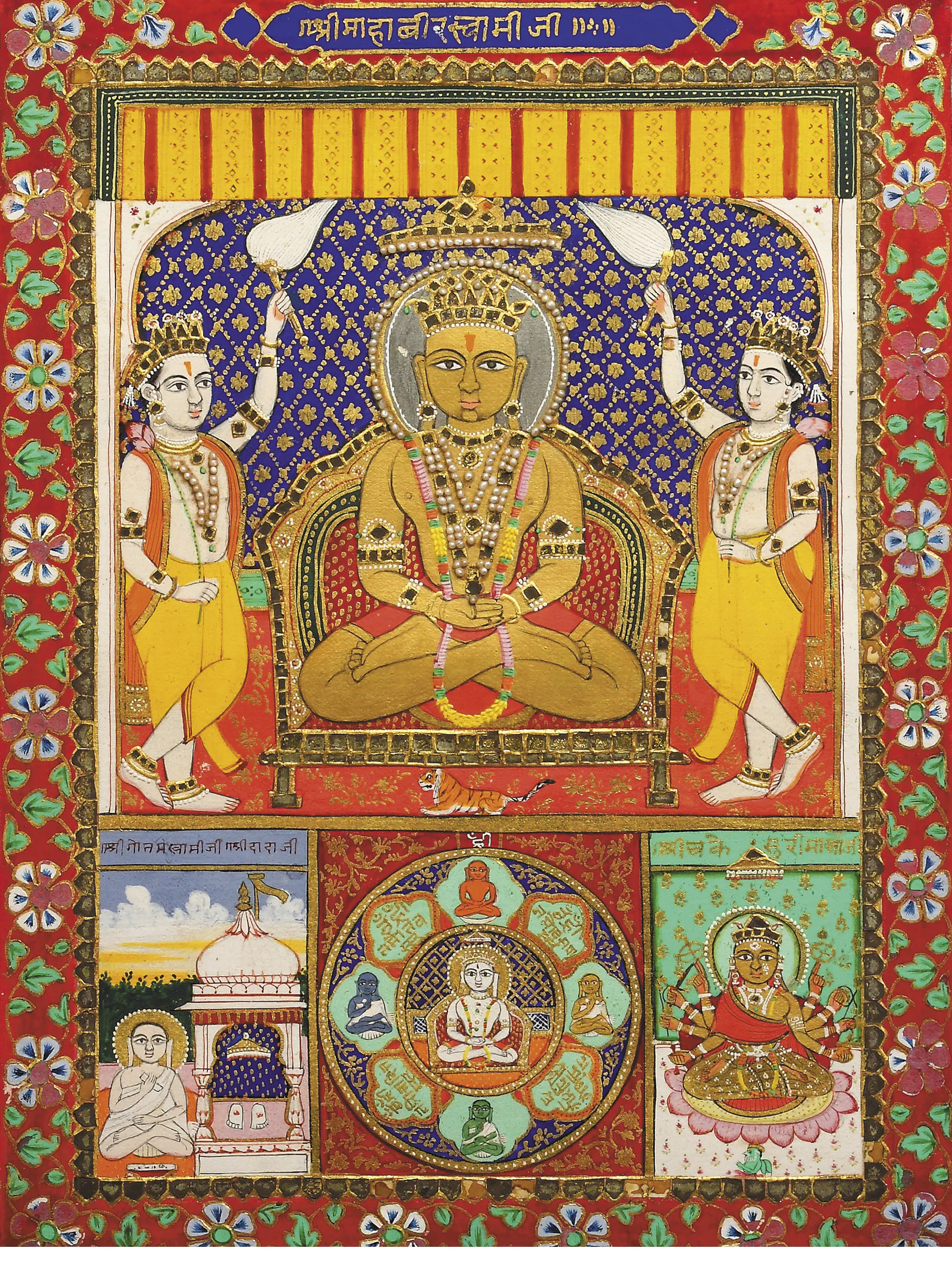
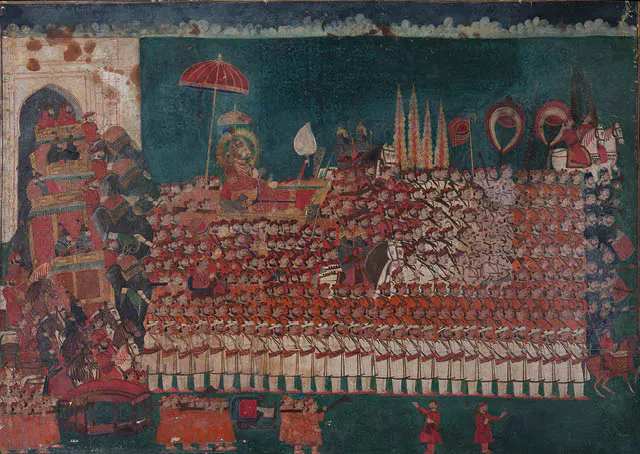
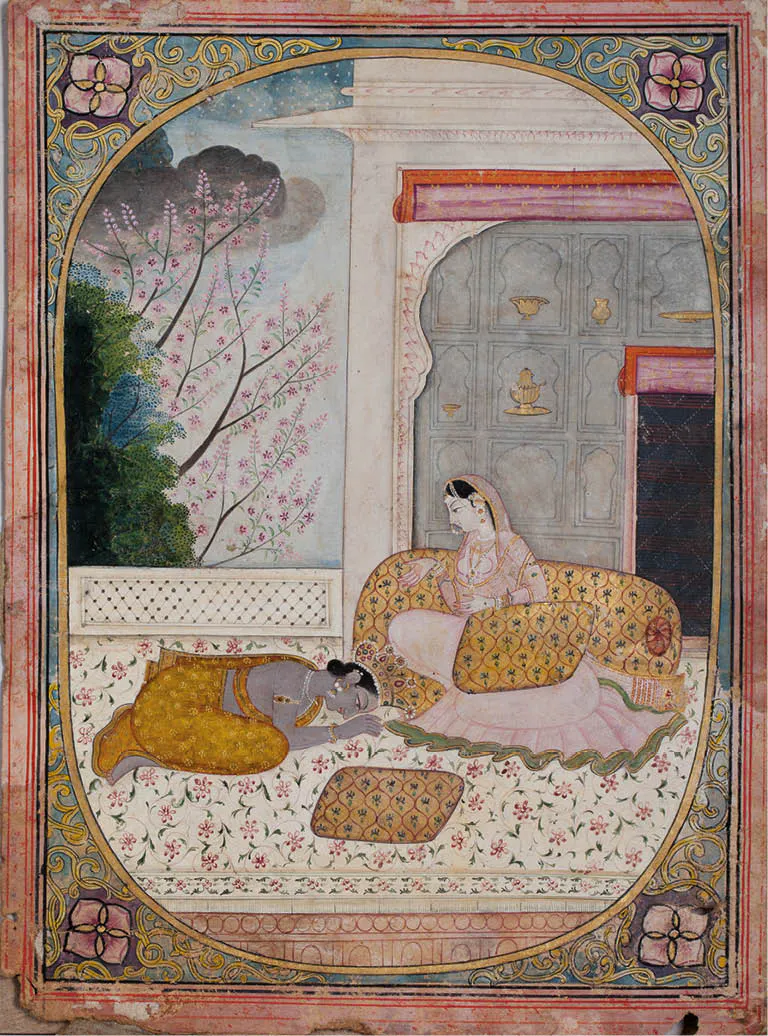
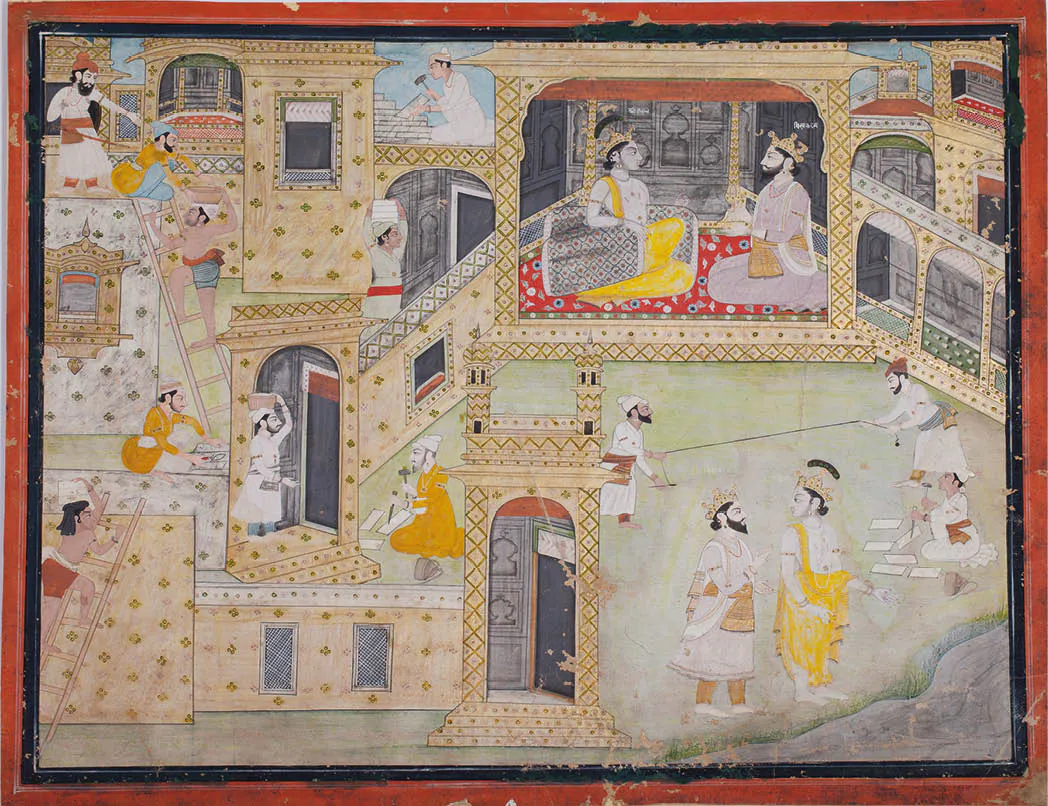
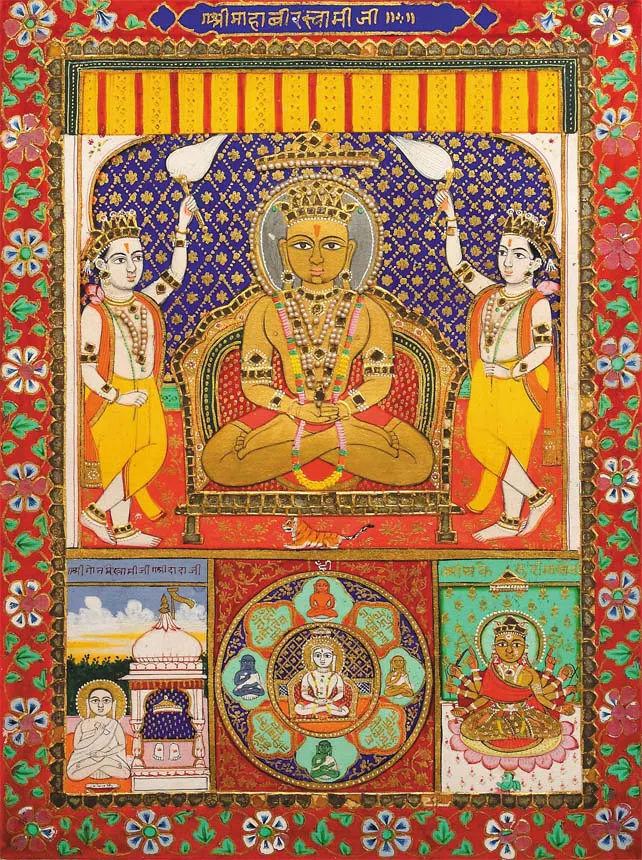
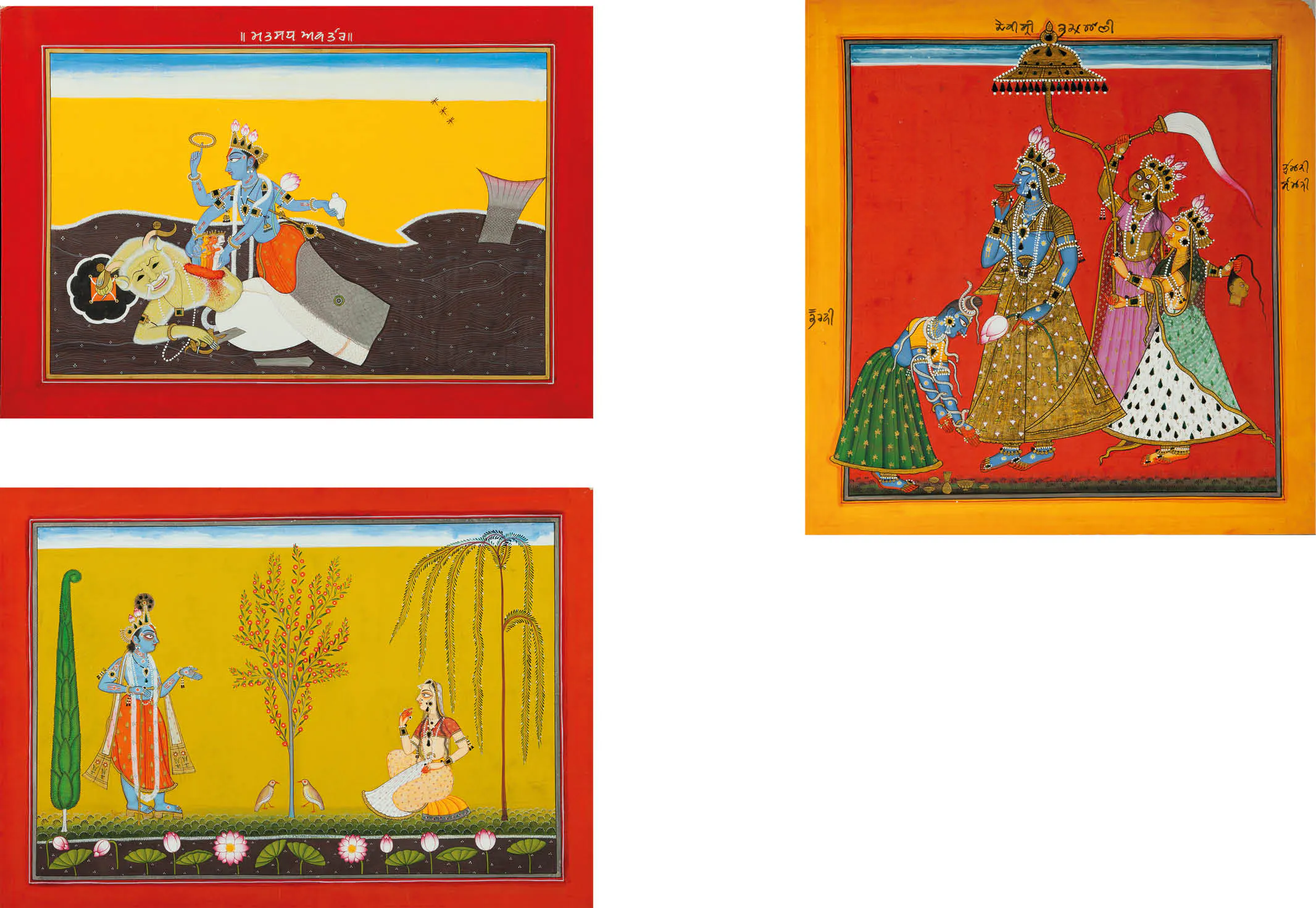
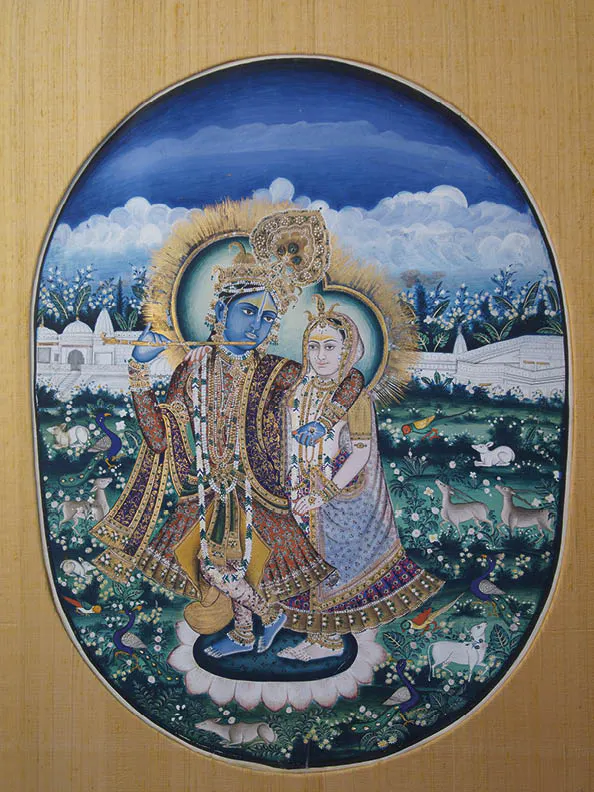
SET OF FIVE UNIQUE RAGMALA MINIATURE PAINTINGS WITH BEETLE WINGS, late 20th century, depicting various ragas in accordance with poetic verses, expressing the mood of each raga.
a) Raga Dipak - considered the raga of generating fire, depicts a three-headed, cock-eyed sage with flames emanating from his body
b) Raga Shree - related to Shiva, favoured for religious events
c) Ragini Tilangi - wife of Raga Hindola, used a lot in the Islamic sufi tradition and in modern singing styles, such as thumri and ghazal
d) Raga Putra Parbal - son of Raga Malkauns
e) Raga Bhairav - considered the most important raga associated with meditation, depicts a seated Shiva
Ornaments in all the paintings are richly decorated using beetle wings
Literature
BASHOLI PAINTINGS
Basholi, a small state near Jammu, was the cradle of Pahari style of painting that started under the patronage of Raja Kirpal Pal (1678 - 1693). The earliest Basholi paintings date around 1685 AD, in a style that was an amalgamation of existing local styles of painting with the great Mughal style that had begun to disseminate from the centralised kaarkhanas (workshops) after Aurangzeb's rule. The resultant new idiom was one full of vitality and vigour. The miniatures were commissioned by the nobility and depicted themes of the manifest Devi, ragmala, and the dalliances of Krishna with his beloved Radha. It was this style that later matured into the lyrical "Kangra Style" of miniatures. Today, Basholi miniature paintings are a rarity and only exist in select Indian and international museums, and a few private collections.
The uniqueness of this lot lies in the now lost tradition of using the wings of the beetle insect, a convention that went out of practice by late 18th century. These lustrous embellishments, carefully cut to size, were used to decorate garments, jewellery and even the eyes of demons in the paintings, in place of gems. The paper is hand-made and painted with real gold and silver. The colours used are ground from stone and minerals.
Related Lots