Manchershaw F Pithawalla’s Suited Gentlemen
Manchershaw Fakirjee Pithawalla trained at the Sir J.J School of Art in Bombay under the guidance of artist Chiranjilal and principal John Griffiths. He later studied at the British Academy in Rome. Pithawala's work stood its own ground among the creations of Pestonjee Bomanjee, M.V. Dhurandhar and Antonio Xavier Trindade, considered leaders among Bombay artists at that time. His excellence in the use of oil paints drew praise from George Birdwood, a senior art critic, who saw Pithawala's copies of Velasquez and Rembrandt paintings and remarked, “When slightly aged, it will be hard to distinguish them from the originals…”
He was awarded the Bombay Art Society's Gold Medal in 1907, and in 1911 he travelled to Italy, France and England, culminating his tour with a successful solo exhibition at the Dore Gallery in London, making him the first Indian artist to do so. (Portraits & Figuratives, Bid & Hammer, Lot 7, catalogue essay)
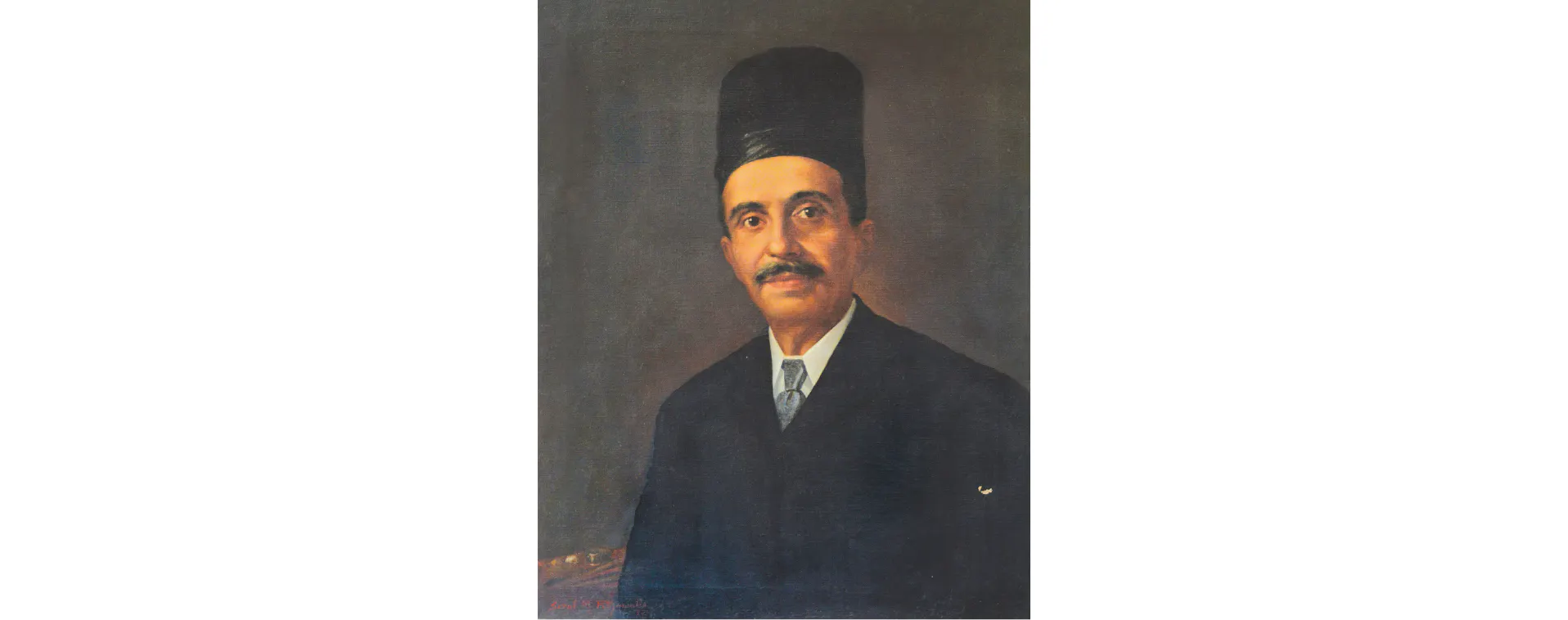
In the late 19th century, the Western academic style gained a foothold in India through British art schools such as the Sir J.J. Institute of Art in Bombay. At the same time, Indian society was undergoing a significant shift. A growing sense of individualism, shaped by Victorian ideals fuelled a rising demand for portraiture. Stalwarts like Raja Ravi Varma and Pestonji Bomanji were particularly influential in translating Western artistic styles into the Indian context.
M F Pithawalla was one such portraiture artist in Bombay, known primarily for capturing the lives of decorated Parsi families in their finest traditional & modern attires. During this period, these families were active patrons of art, music and architecture, using their strong educational and financial standing to drive modernization of the country.
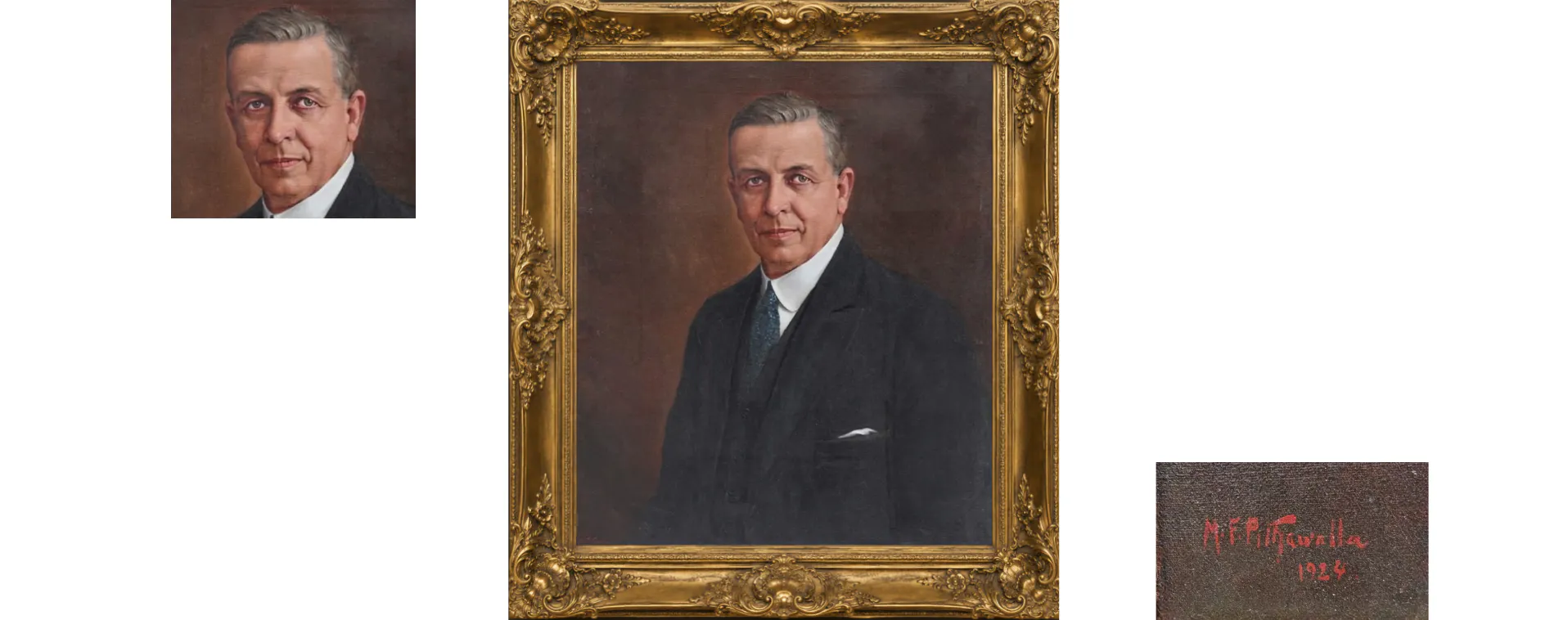
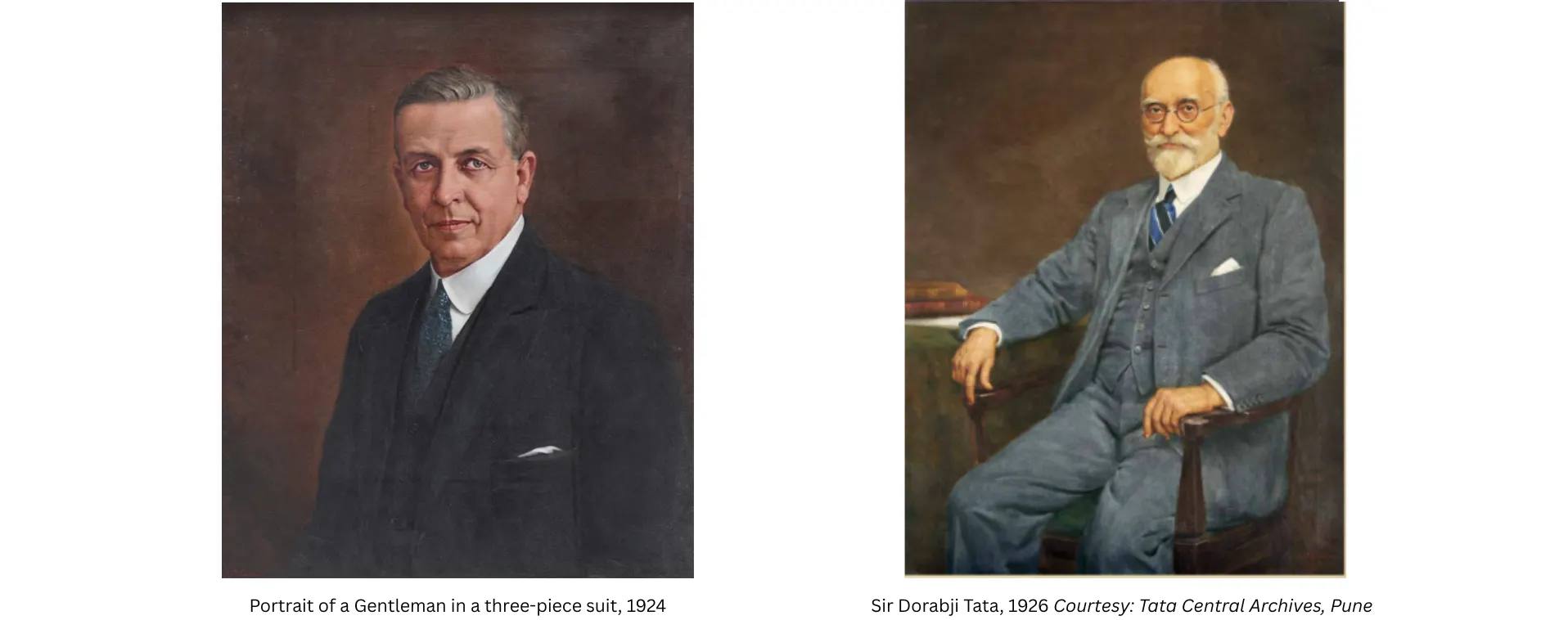
Here we see one such portrait: a gentleman in a three-piece suit dated 1924. His crisp white shirt, neat tie, pocket square and finely tailored ensemble suggest his influential standing in society. The artist's mastery truly shines in the rendering of the gentleman's face. Wrinkles on the forehead, his striking brown eyes and serene expression is what makes this portrait so compelling. The gentleman’s hair is neatly combed; he appears stern yet calm. The artist captures the viewer's gaze, drawing focus onto the gentleman's face while the background remains flat, almost studio-like. In all likelihood, this is a Parsi gentleman from a distinguished Bombay family.
The artist's body of work stands as a testament to his enduring relationship with his community. Pithawalla's portraits are not merely paintings of the wealthy rather they are historical documents of Parsi life, capturing their ideals, fashion and sensibilities. A remarkable portrait of Sir Dorabji Tata displays Pithawalla’s proficiency in capturing business leaders. Son of Jamsetji Tata, an eminent industrialist, Sir Dorabji Tata was a pioneer of science and technology in a newly developing India. Placed side by side, the two paintings below reveal striking similarities starting with their attire. Both gentlemen are dressed in impeccable three-piece suits. Both sitters are positioned off centre, to the right of the frame. They are placed against a flat backdrop that keeps the viewer’s focus on the sitter. Although one is sitting and the other is in a standing position, Pithawalla captures them in a way where one cannot differentiate in the subtle nuances of this pose. Both men gaze straight ahead, with a strong, sharp line of vision.
The artist also painted portraits of other nation-building Parsi figures, including the esteemed scholar K.R. Cama and the merchant-philosopher Sir Jamsetjee Jeejebhoy, whose portrait drew much acclaim. Pithawalla's standing as a portrait artist is further evidenced by his 1905 series on Indian women, commissioned for presentation to Queen Mary during her royal visit to India.
M F Pithawalla's portraits transcend their role as fine art; they serve as visual chronicles of Bombay's elite, capturing not just faces but an entire community's evolving identity, aspirations and place within a changing colonial society.
REGISTER TO BID ON LOT 7, ONLINE AUCTION, 31ST JULY 2026
Related Links:
1. A Melange of Portraits at Bid & Hammer’s Next, Republic Word, 20th July 2026
2. Live Auction - October 2026: View Related Lots