Closed
Lot 40
ABANINDRANATH TAGORE (1871 - 1951)
ASN0007
Auction Type: live
Dry-pastel & watercolour on paper
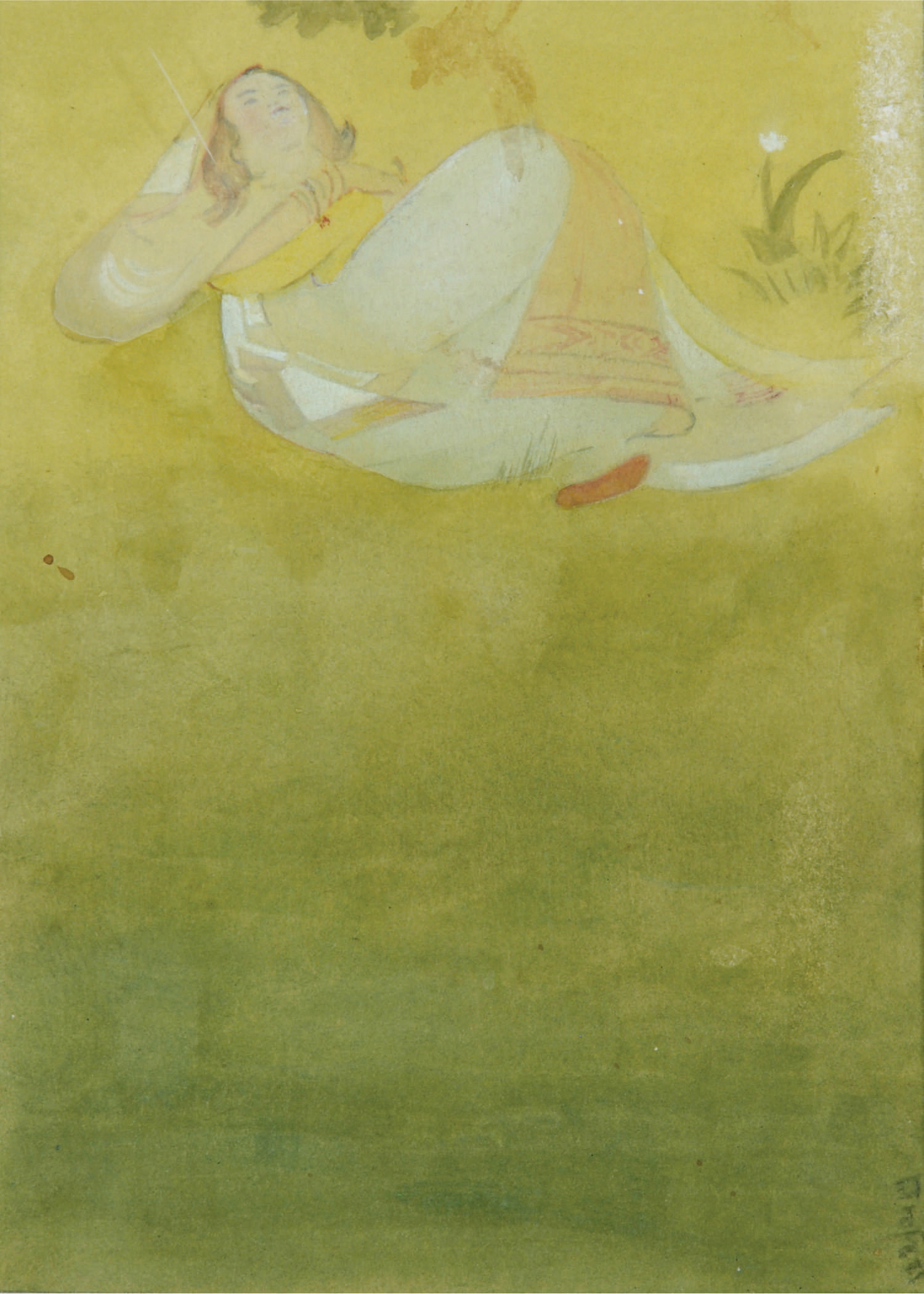
PORTRAIT OF LADY
Dry-pastel & watercolour on paper
Signed lower right
15.7 x 13.7 in
Dry-pastel & watercolour on paper
Signed lower right
15.7 x 13.7 in
Estimate: ₹15,00,000 – ₹17,00,000
Provenance
Property of a Delhi based collector
Details
One of the pioneers of modern Indian art, Abanindranath Tagore, took to portraiture from an early stage of his art practice. His models were mostly friends and family members of the famous Tagore household in Jorasanko region of Calcutta. These portraits were done mostly in oil pastels and, particularly in their late 19th century phase, concentrating on a density of surface effect, with texture and chiaroscuro combining to heighten an impression of character. This practice of Abanindranath was retained even in the later stages thereby drawing a semblance of photo illusionism, in lieu of his engagement with classical European aesthetic. Many of his early series of portraits reveal a thickness of paint, with great concentration on bone structuring enhanced by subtle highlighting quite reminiscent of the Baroquish qualities of Rembrandt.
By 1904, he gradually moved towards the Wash technique, where he rubbed the paints to produce a softer multi-toned ‘washed’ effect. Aspects like modeling, texture and tonal variation took a subsidiary role, replaced by the ethereal illumination of a distinct light source. This marked a decisive shift from character orientation (swabhava) to mood setting (rasa).
From 1925 onwards, Abanindranath’s portraits underwent another transition, towards a thicker chromatic density that he achieved by using his pastels directly on cardboard, so that the golden background shone through the paint. In a later stage, instead of the cardboard he used a rough textured hand-made paper to work on. Upon rubbing with pastels the paper colour still peered out in a uniform tonal gradation which the artist further highlighted in place with lighter shades of colour and finally completed by adding light touches of brushwork to outline facial features. The resulting image was that of a serene meditative state that signaled a return from the transience of ‘mood’ to the ‘interiority’ of eternal presence. 'Portrait of Lady' belongs to this insightful phase of Abanindranath’s engaging journey as an artist.
By 1904, he gradually moved towards the Wash technique, where he rubbed the paints to produce a softer multi-toned ‘washed’ effect. Aspects like modeling, texture and tonal variation took a subsidiary role, replaced by the ethereal illumination of a distinct light source. This marked a decisive shift from character orientation (swabhava) to mood setting (rasa).
From 1925 onwards, Abanindranath’s portraits underwent another transition, towards a thicker chromatic density that he achieved by using his pastels directly on cardboard, so that the golden background shone through the paint. In a later stage, instead of the cardboard he used a rough textured hand-made paper to work on. Upon rubbing with pastels the paper colour still peered out in a uniform tonal gradation which the artist further highlighted in place with lighter shades of colour and finally completed by adding light touches of brushwork to outline facial features. The resulting image was that of a serene meditative state that signaled a return from the transience of ‘mood’ to the ‘interiority’ of eternal presence. 'Portrait of Lady' belongs to this insightful phase of Abanindranath’s engaging journey as an artist.
Notes
National Art Treasure / Non Exportable